
What Does the Energy Rating Label on a Deep Freezer Mean?

- 1The quick answer
- 2Which labels you may meet in Nigeria
- 3What you will see on the label
- 4Climate class matters in a hot shop
- 5From label kWh to naira
- 6Why your bill may not match the label
- 7How I would compare two freezers
- 8Imagine standing between two freezers
- 9What a lower kWh figure does for your backup power
- 10Five questions I would ask the seller
- 11What to do if there is no label
- 12Mistakes people make with energy labels
- 13Quick checklist
- 14Questions people ask
- What does the star rating on a freezer mean?
- Is a lower kWh figure always better?
- Does the label show my real electricity cost?
- What climate class should I choose for a hot shop?
- What if my freezer has no energy label?
- 15Continue reading
- An energy label shows tested electricity use and compares a freezer with similar models
- Compare kWh per year only between freezers of the same type and size
- The label is a test result, so a hot shop will usually use more
- Turning label kWh into naira shows which freezer really costs less over time
You stand between two freezers in a shop. One costs less today. The other has a better label on the lid. The seller smiles and says, "Just take the cheap one."
But you remember last month's electricity bill, and a small knot forms in your stomach. A freezer runs every day for years. The wrong choice does not end when you leave the shop.
In this guide I explain what the energy label means, what it leaves out, and how to turn its numbers into naira. Then you can compare two freezers fairly and sleep well after you pay.
The quick answer
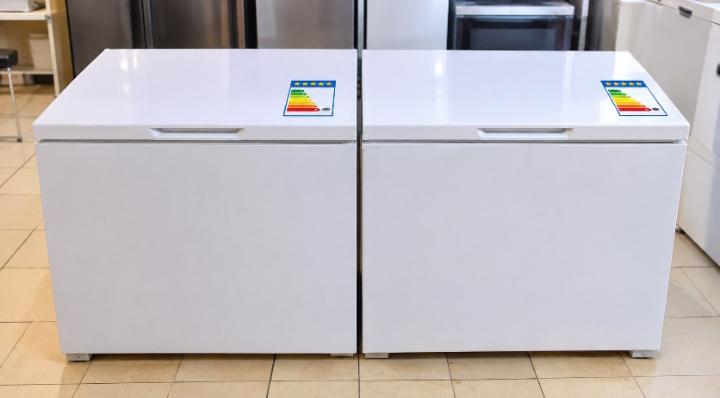
An energy label is a sticker that shows how much electricity a freezer used in a test, and how it compares with similar models.
You will usually see a star rating or a letter, plus kWh per year or per 24 hours.
A lower kWh figure and a better rating mean a lower running cost. That holds only when you compare freezers of the same type and a similar size.
The label is a test result, not your bill. A hot shop, a busy lid and a thick layer of frost will push real use above it.
In one line: the label helps you compare freezers in the shop. A meter tells you what your freezer costs once it is at home.
Which labels you may meet in Nigeria
Freezers in Nigerian shops come from many places, so you may see more than one style of label. Each one answers the same question in its own way.
The Standards Organisation of Nigeria runs an energy labelling scheme. SON says its scheme covers refrigerators and freezers, and the related standard is NIS 942:2017.
CLASP, a group that tracks appliance standards, lists NIS 942:2017 as the standard for minimum energy performance and labels for refrigerators and freezers in Nigeria.
SON has also put draft regulations out for comment, so details may change. Check its page for the latest before you quote a rule to a supplier.
The idea behind these labels is simple. They let a buyer rank freezers without owning a laboratory.
They can also push makers to build more efficient freezers, because a poor label is hard to sell.
Imported freezers may carry a label from their home market. This table shows the three you are most likely to see.
| Label | Where it comes from | What it usually shows |
|---|---|---|
| Nigerian energy label | Standards Organisation of Nigeria | A star rating and energy information for the model |
| European label | European Union | A letter class from A to G and kWh figures |
| US EnergyGuide | United States | Estimated yearly energy use and running cost |
| No label | Many used or unbranded units | Nothing, so you must ask or measure |
I would never reject a freezer only because its label looks unfamiliar. I would ask for the kWh figure and the rating plate, then judge it myself.
What you will see on the label
Labels look different, but most carry the same handful of facts. This table shows what each one tells you and what to watch.
| Item | What it tells you | What to watch |
|---|---|---|
| Star rating or letter class | Efficiency compared with similar models | Compare only freezers of the same type and size |
| kWh per year or per 24 hours | Energy used in a test room | Real use in a hot shop is usually higher |
| Volume in litres | Storage space | Use litres to compare kWh fairly |
| Freezing capacity (kg per 24 h) | Fresh food it can freeze in a day | Matters if you load warm stock |
| Climate class | Room temperatures it is built for | T or ST suits hot rooms |
| Four-star symbol | Freezes fresh food and stores at -18°C or colder | This is about food, not electricity |
Stars and letters compare a freezer with others of its kind. A better class means lower tested energy use for its size.
Do not compare ratings across different sizes without checking the kWh. A big freezer with a good rating can still use more energy than a small freezer with an average one.
The four-star symbol is about food, not power. It means the freezer is built to freeze fresh food and then store it at -18°C or colder.
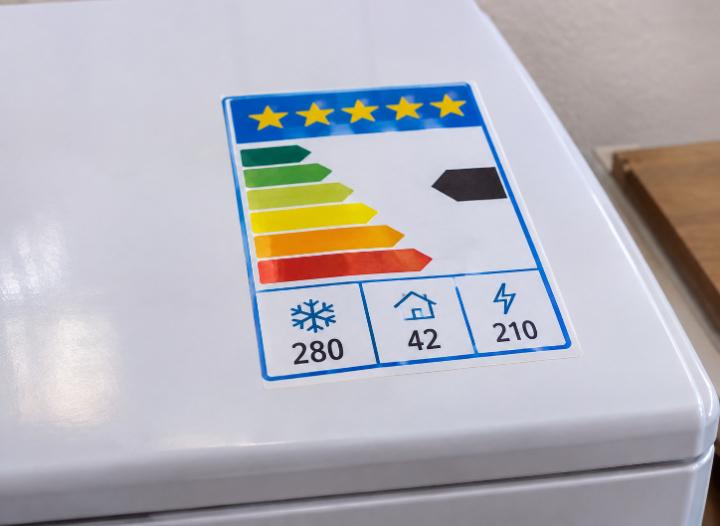 Look for the kWh figure and the freezer volume, not only the stars.
Climate class matters in a hot shop
Many labels carry a climate class. It tells you the room temperatures the freezer was designed for. This matters a lot when your shop gets hot by midday.
| Class | Built for room temperatures of about |
|---|---|
| SN | 10°C to 32°C |
| N | 16°C to 32°C |
| ST | 16°C to 38°C |
| T | 16°C to 43°C |
A freezer built for a cooler room can run longer in a hot one. Longer running means more units on your meter and more wear on the compressor.
If your shop is hot, I would look for ST or T. Ask the seller to show the class on the label, not just say it.
Many shops have no air conditioning. On a hot afternoon the room can sit well above 32°C, which is outside what an N class freezer was designed for.
From label kWh to naira
Here is the step that turns a sticker into a decision. Multiply the yearly kWh on the label by your rate per kWh. That gives you a yearly running cost.
Some labels show kWh per 24 hours instead of per year. Multiply that by 365. A label of 0.6 kWh per 24 hours is about 219 kWh a year.
Divide by 12 for a monthly figure. Use your own rate, which you get by dividing the naira on a token receipt by the units you received.
Say Freezer A shows 220 kWh a year and Freezer B shows 300 kWh a year. Your rate is ₦150 per kWh. Freezer A costs ₦33,000 a year to run. Freezer B costs ₦45,000.
That is ₦12,000 every year. It sounds small until you stack it across five years of daily use.
| Freezer A (better label) | Freezer B (cheaper) | |
|---|---|---|
| Label kWh per year | 220 | 300 |
| Yearly running cost at ₦150 per kWh | ₦33,000 | ₦45,000 |
| Five-year running cost | ₦165,000 | ₦225,000 |
| Extra price at the shop | ₦30,000 more | Lowest price |
| Five-year total difference | ₦30,000 cheaper overall |
Freezer A costs ₦30,000 more at the shop but saves ₦60,000 in electricity over five years. Net, you keep ₦30,000. You also earn the extra money back in about two and a half years.
Your numbers will differ. Prices, rates and real use all change the answer. The method stays the same, and my deep freezer wattage calculator lets you test your own figures.
Why your bill may not match the label
A label is built in a test room. Your shop is a different place. That gap is why the label can look better than your real bill.
| Factor | In a test | In your shop |
|---|---|---|
| Room temperature | Fixed and moderate | Often hotter and changing through the day |
| Lid openings | Usually none | Many, every day |
| Stock | A standard load | Warm stock and uneven loading |
| Frost and seals | A new unit | An older unit with wear |
| Power supply | Stable | Voltage dips and outages |
None of this makes the label useless. It makes it a fair way to rank freezers against each other. It just cannot predict your exact bill.
For your exact bill, measure. A plug-in energy meter on the freezer for 24 hours gives you the figure the label cannot.
How I would compare two freezers
When I compare two freezers, I follow the same short routine. It takes about ten minutes, and it can save you years of overpaying.
- Pick freezers of the same type and a similar size.
- Ask to see the label on the actual unit, not a brochure.
- Write down the kWh per year, the litres and the climate class.
- Read the rating plate watts, using the power rating decoder if the figures confuse you.
- Turn the kWh into naira at your own rate.
- Add the price gap and work out how long the better freezer takes to pay for itself.
If the payback is two or three years and you plan to keep the freezer for ten, the better label usually wins. If cash is tight today, the cheaper one may still be right.
Imagine standing between two freezers
Say a buyer named Emeka is opening a small frozen food stall. His savings are thin. He has one freezer's worth of money, and two freezers in front of him.
The cheaper one saves him ₦30,000 today. That money could buy stock. The pull is strong, and I understand it.
Then he does the sum. The better label saves ₦12,000 a year on power. In two and a half years the extra price comes back, and after that every year is gain.
He also checks the climate class. The cheaper freezer is built for a cooler room than his stall. In a hot stall it will probably run longer than its label suggests.
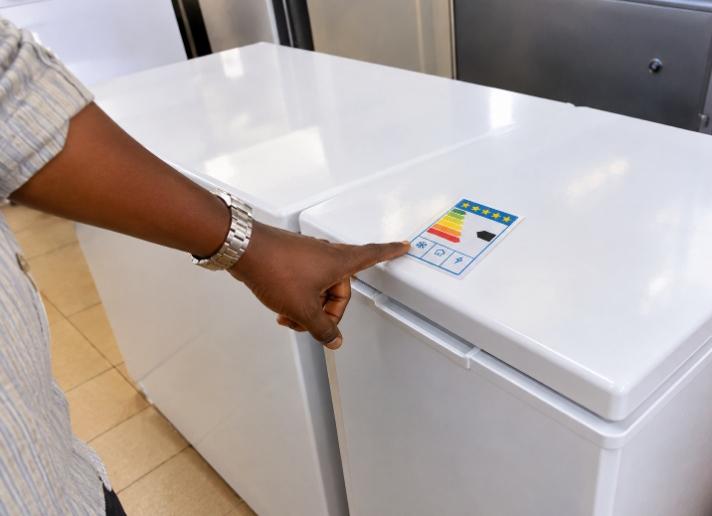 Read both labels on the actual units before you decide.
Emeka chooses the better freezer, but he asks the dealer to put the figures in writing. He feels calmer. He is not hoping the bill will be fine. He has already done the maths.
If his stock money had been even thinner, the cheaper freezer could still have been the right call. The goal is not to chase the best label. It is to choose with your eyes open.
What a lower kWh figure does for your backup power
An efficient freezer helps in a second way. It uses fewer units, so a battery bank for backup can be smaller for the same hours.
That matters when you plan solar or an inverter. Batteries are one of the biggest costs in a backup system, and fewer units needed means a smaller bill.
Use the inverter and battery sizing calculator to see how running watts and hours change the battery you need.
Running cost also belongs in your profit sums. If you sell frozen food, power is a line you pay every month. The frozen food profit calculator shows where it sits.
Five questions I would ask the seller
A few calm questions can tell you more than any brochure. Keep them short and write the answers down.
- Can I see the label on the actual unit?
- What is the kWh per year, and what size is the freezer?
- Which climate class is it built for?
- How long is the warranty on the compressor?
- Can I plug it into a meter before I pay?
A seller who answers these calmly is a good sign. A seller who dodges the label question is telling you something too.
What to do if there is no label
Used freezers, local assemblies and older units often have no label at all. That does not mean you cannot judge them.
Look for the rating plate on the back or side and copy the watts. Ask the seller for the model number and search the manual.
Then measure. A plug-in energy meter reading over one day tells you what the freezer uses, label or no label. Ask a dealer to let you test one before you pay.
The US Department of Energy explains how to estimate appliance energy use, including EnergyGuide labels and usage monitors. The same ideas work for freezers here.
In the US, the ENERGY STAR seal marks efficient products. If an imported freezer carries it, that is a good sign, though you should still check kWh and size.
Mistakes people make with energy labels
Most label mistakes come from rushing. Slow down on these.
- Comparing different sizes. Always check the litres next to the kWh.
- Reading stars alone. A good rating on a large freezer can still use more energy.
- Treating the label as a bill. It is a test result.
- Ignoring climate class. A hot shop needs ST or T.
- Forgetting the price gap. Work out how long the better freezer takes to pay back.
Quick checklist
Run through this before you pay for a freezer.
- I compared freezers of the same type and size.
- I read kWh per year, litres and climate class on the actual unit.
- I turned the kWh into naira at my own rate.
- I worked out the payback on any price gap.
- I planned to measure the freezer with a meter at home.
Questions people ask
What does the star rating on a freezer mean?
It compares the freezer with similar models. More stars or a better class means lower tested energy use for its size. Always check the kWh too.
Is a lower kWh figure always better?
Usually yes, if the freezers are the same type and size. A small freezer will always show fewer kWh than a big one.
Does the label show my real electricity cost?
No. It shows a test result. Your shop is hotter and busier than a test room, so real use is often higher.
What climate class should I choose for a hot shop?
Look for ST or T, which are built for hotter rooms. Ask the seller to show the class on the label.
What if my freezer has no energy label?
Read the rating plate, ask for the model number, and measure real use with a plug-in meter before you rely on any number.
Continue reading
If this helped, these pages are good next steps:
- How Many Watts Does a Deep Freezer Use in Nigeria? explains why label watts and daily use differ.
- How to Check the Power Rating of a Deep Freezer shows you how to read the plate on any freezer.
- How Much Does It Cost to Run a Deep Freezer in Nigeria? turns units into a monthly bill.
- Deep Freezer Electricity Cost Calculator gives you a quick monthly figure.
General information only, not professional advice. See our disclaimer and editorial policy.
Print it, save it as a PDF, or copy the link to find it again.
0 Comments