
How Much Does It Cost to Run Two Deep Freezers in Nigeria?

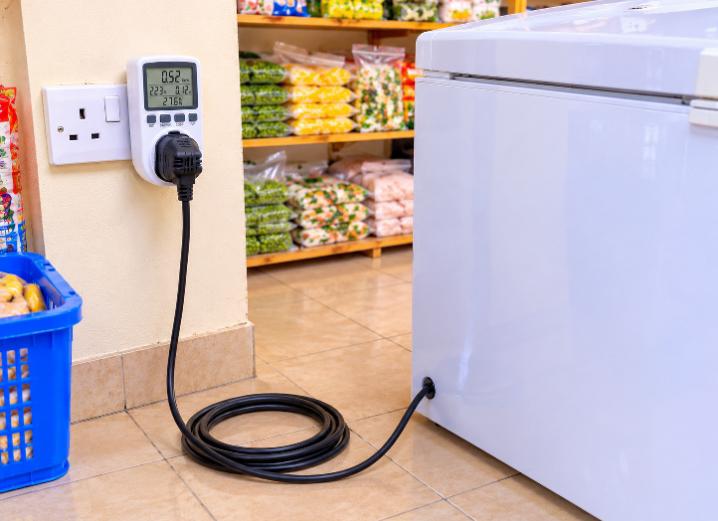
- 1The short answer
- 2Why two freezers do not always cost twice as much as one
- 3Step 1: Find the daily energy use of each freezer
- 4Step 2: Check the freezer labels
- 5Step 3: Find the tariff that applies to your shop
- 6A worked example: two freezers in one shop
- How the tariff changes the monthly total
- How different freezer readings change the cost
- 7Step 4: Add generator fuel when the grid is not available
- 8Case study: what two freezers cost one shop
- 9How to find which freezer is costing more
- 10Eight practical ways to control the cost
- 11Grid, generator and solar: keep the costs separate
- 12Five mistakes to avoid when calculating two-freezer costs
- 13Quick checklist
- 14Questions people ask
- How much does it cost to run two deep freezers monthly in Nigeria?
- Do two deep freezers use twice the electricity of one?
- Can I calculate the cost from the watts printed on the freezer?
- Should I use one energy meter for both freezers?
- Does the electricity tariff depend on where my shop is located?
- Should I include generator fuel in the freezer electricity cost?
- Is solar always cheaper than a generator?
- 15Continue reading
- 16Sources and further reading
- Add the measured daily kWh of both freezers before calculating the monthly cost
- Use your own electricity tariff rather than a rate copied from another state or business
- Measure each freezer separately to find which one uses more power
- Treat generator fuel as a separate cost and record how much fuel the freezers actually use
- Include backup-power and maintenance costs when judging the full cost of running the shop
Running one deep freezer is already a regular expense. Add a second one and the cost can become harder to track. The electricity bill may rise, but it is not always clear how much each freezer is using.
In this guide I show how I would calculate the cost of running two deep freezers in a Nigerian shop. I will use measured daily energy, explain how to apply your tariff, and show where generator fuel fits into the calculation.
The figures in the examples are for teaching. They are not a current national electricity rate or a promise of what your own freezers will consume.
The short answer
To estimate the monthly grid cost of two freezers, add the daily kWh used by both, multiply by 30, then multiply by your applicable cost per kWh.
Monthly energy use = (Freezer A daily kWh + Freezer B daily kWh) × 30
Monthly grid cost = monthly energy use × your tariff per kWh
For example, imagine Freezer A uses 2.0 kWh a day and Freezer B uses 1.4 kWh a day. Together they use 3.4 kWh daily, or about 102 kWh over 30 days.
At an example rate of ₦150 per kWh, the estimated grid-energy cost is ₦15,300 for the month. Your actual cost will change with your measured use and the rate on your own bill or vending receipt.
Quick tip: Measure each freezer separately if you can. That tells you whether one unit is using much more power than the other.
Why two freezers do not always cost twice as much as one
It is tempting to take the cost of one freezer and double it. That can give a rough starting point, but it is not always accurate.
Two freezers may have different capacities, compressor conditions, age and daily use. One may be opened more often because it holds the products customers ask for most.
These are the main things that affect their combined electricity use:
- Capacity and design. A large freezer may use more energy, but capacity alone does not tell you its real daily consumption.
- Compressor condition. A worn or faulty unit may run for longer than it should.
- Lid openings. The freezer opened repeatedly during busy hours can use more energy as warm air enters.
- Room temperature. A hot shop, direct sunlight or poor ventilation can increase the work the cooling system has to do.
- Frost and door seals. Heavy frost or a damaged seal can make the freezer work harder.
- Stock arrangement. A freezer that is overloaded or has blocked airflow may not cool evenly.
- Power source. Grid electricity, generator fuel and battery backup have different costs and should be tracked separately.
Step 1: Find the daily energy use of each freezer
The most useful figure is energy consumption in kilowatt-hours (kWh). Your meter or energy monitor may display this as kWh or units.
If you already have a suitable plug-in energy meter, use it to measure one freezer at a time. Check that the meter is rated for the freezer's electrical load and is suitable for compressor equipment. Do not use a low-rated meter, damaged socket or loose extension connection.
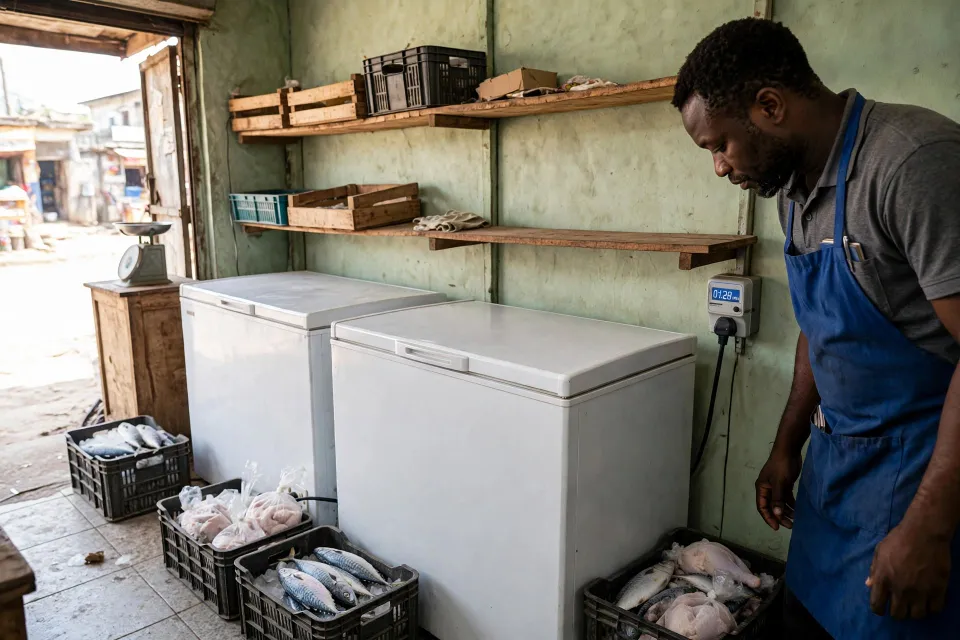 Measuring each freezer separately helps identify how much electricity each unit consumes.
Here is the method I would follow:
- Check the meter's current and power rating before connecting it.
- If the connection or rating is unclear, ask a qualified electrician to check it.
- Measure Freezer A for at least 24 hours. A seven-day reading gives a more useful average for a shop with changing stock and customer activity.
- Record the total kWh and divide it by the number of days measured.
- Repeat the same process for Freezer B.
- Add the two daily averages to get the combined daily use.
Keep your normal shop routine during the test. Do not deliberately open the lids less or change the temperature setting just to get a lower reading. You want a result that reflects how the business really operates.
Step 2: Check the freezer labels
A rating label can help you understand the appliance, even if it does not give you the exact daily consumption in your shop.
Look for the voltage, current, rated input in watts, and any stated energy use in kWh per day or per year. The label is usually at the back, on the side or inside the cabinet.
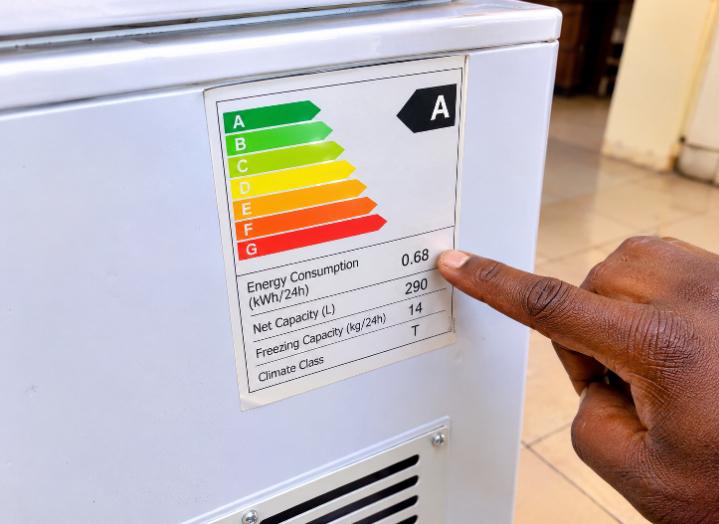 Record the model and electrical information from each freezer's rating label.
Do not assume that the label's running watts are the same as its average energy use over 24 hours. A compressor switches on and off as it maintains the temperature. Multiplying its running watts by 24 hours can overstate the daily energy use.
If the label only gives volts and amps, their product can provide a rough apparent-power estimate, but it is not a substitute for measuring kWh. For a more reliable operating-cost calculation, use an energy meter that is appropriate for the appliance.
Step 3: Find the tariff that applies to your shop
Do not use a tariff quoted by someone in another town or on another electricity feeder. Your rate may be different.
The Nigerian Electricity Regulatory Commission (NERC) says a customer's tariff can be found on the electricity bill or prepaid vending receipt. Its guidance also explains that service-based tariff bands are linked to minimum daily supply hours. Check the current information for your own distribution area and account.
You can read NERC's electricity tariff guidance and its customer service for checking how much you pay.
For a prepaid meter, NERC explains that dividing the amount vended by the units received can help calculate the tariff, but VAT should be deducted for that calculation. If your receipt includes other deductions or charges, check the details rather than treating every naira paid as the energy rate.
For this article's examples, I use ₦150 per kWh simply to make the arithmetic easy. It is not a current national tariff recommendation.
A worked example: two freezers in one shop
Let us use two example freezers. These readings are illustrative, not measured product specifications.
- Freezer A uses 2.0 kWh per day.
- Freezer B uses 1.4 kWh per day.
- Combined use is 3.4 kWh per day.
- The example tariff is ₦150 per kWh.
- The month is calculated as 30 days.
The calculation is:
- Combined daily use: 2.0 + 1.4 = 3.4 kWh.
- Monthly use: 3.4 × 30 = 102 kWh.
- Monthly cost: 102 × ₦150 = ₦15,300.
- Annual use: 3.4 × 365 = 1,241 kWh.
- Annual cost: 1,241 × ₦150 = ₦186,150.
That is the estimated grid-energy cost for the two freezers under these assumptions. It does not include generator fuel, inverter losses, battery replacement, repairs or other shop appliances.
How the tariff changes the monthly total
The next table keeps the same 102 kWh monthly use and changes only the example tariff. The rates are scenarios, not a list of current Nigerian tariffs.
| Example tariff per kWh | Combined monthly use | Estimated monthly grid cost |
|---|---|---|
| ₦100 | 102 kWh | ₦10,200 |
| ₦150 | 102 kWh | ₦15,300 |
| ₦200 | 102 kWh | ₦20,400 |
| ₦250 | 102 kWh | ₦25,500 |
This is why it is important to enter your own rate. Two shops with identical freezers and usage can pay different amounts if their applicable tariffs differ.
How different freezer readings change the cost
This second table uses the same example tariff of ₦150 per kWh. It shows how the combined cost changes when the freezers use different amounts of energy.
| Freezer A daily use | Freezer B daily use | Combined monthly use | Monthly cost at ₦150/kWh |
|---|---|---|---|
| 1.0 kWh | 1.0 kWh | 60 kWh | ₦9,000 |
| 1.5 kWh | 2.0 kWh | 105 kWh | ₦15,750 |
| 2.0 kWh | 1.4 kWh | 102 kWh | ₦15,300 |
| 2.5 kWh | 3.0 kWh | 165 kWh | ₦24,750 |
| 3.0 kWh | 3.5 kWh | 195 kWh | ₦29,250 |
The figures are not benchmarks for small, medium or large freezers. They simply show how to calculate the bill from two measured readings.
Step 4: Add generator fuel when the grid is not available
If your shop uses a generator during outages, the grid bill is not the full cost of keeping the freezers cold.
Start by recording how many litres of fuel you buy for the generator and how long it runs while supplying the freezers. Do not assume that every litre is used only by the freezers if the generator also powers lights, fans, a television or other equipment.
A simple first estimate is:
Generator fuel cost for the period = litres used × price paid per litre
If the generator powers other equipment too, you need a fair way to allocate the fuel cost. The most accurate approach is to measure the generator's electrical output to the relevant loads with equipment installed and checked by a qualified electrician. Do not attempt to open generator wiring or improvise a measurement connection.
For a practical shop record, write down:
| Date | Generator start/end time | Litres added | Amount paid | Equipment running |
|---|---|---|---|---|
| Monday | 6:00 pm–9:00 pm | 3 L | ₦____ | Two freezers and lights |
| Tuesday | 7:00 pm–10:00 pm | 3 L | ₦____ | Two freezers |
The entries above are a blank-style example. Replace them with your own readings and receipts. Fuel consumption changes with generator size, load, condition and maintenance, so I would not use a universal litres-per-hour figure.
Never operate a petrol or diesel generator inside a shop, room, corridor or enclosed space. Keep it outdoors, away from doors, windows and air intakes, and follow the manufacturer's instructions. Carbon monoxide from generator exhaust can be fatal.
Case study: what two freezers cost one shop
This case study is illustrative. I will call the owner Amina, and all the figures are invented to demonstrate the calculation.
Amina sells frozen fish and chicken. She has two chest freezers and uses the grid when it is available. She also runs a generator during outages. Before measuring, she only knew the total amount she spent on electricity and fuel. She did not know how much the two freezers used separately.
She measures each freezer for seven days and calculates these daily averages:
| Reading | Freezer A | Freezer B | Combined |
|---|---|---|---|
| Average daily energy | 2.0 kWh | 1.4 kWh | 3.4 kWh |
| 30-day energy estimate | 60 kWh | 42 kWh | 102 kWh |
For this example, she uses an assumed grid rate of ₦150 per kWh. The grid cost is 102 × ₦150, or ₦15,300 for 30 days.
She then checks her notebook and finds that she spent ₦18,000 on generator fuel during the same month. The generator also powered lights on some evenings, so she does not claim that all ₦18,000 belongs to the freezers. She records it separately until she can measure or reasonably allocate the share used by the freezers.
Her basic monthly power record therefore looks like this:
| Cost item | Amount | How she treats it |
|---|---|---|
| Estimated grid energy for two freezers | ₦15,300 | Based on measured kWh and example tariff |
| Generator fuel bought | ₦18,000 | Shared with other shop loads; not all assigned to freezers |
| Repairs or servicing | ₦0 in this example | Record when paid |
| Battery or inverter costs | Not applicable in this example | Add if the shop uses backup equipment |
Amina now has a better picture. She can see the estimated grid cost of the two freezers and the separate amount spent on generator fuel. She avoids pretending that the whole generator bill belongs to the freezers when other equipment also uses it.
The lesson is to separate what you know from what you are estimating. That makes the final business-cost figure more useful.
How to find which freezer is costing more
Once you have separate readings, compare the daily kWh. Do not judge only by freezer size or how old it looks.
If one unit consistently uses much more energy, check the conditions around it before assuming it is faulty.
- Is it opened more often during customer orders?
- Is it placed near sunlight, a cooker or a generator?
- Does the lid close fully?
- Is there heavy frost inside?
- Is the condenser area dusty or blocked, according to the manufacturer's maintenance instructions?
- Is the freezer overloaded or packed so tightly that air cannot circulate as designed?
- Does it struggle to maintain the required frozen-food temperature?
If the freezer runs continuously, makes unusual noises, trips a breaker or fails to keep food frozen, arrange an inspection by a qualified refrigeration technician. Do not remove electrical covers or attempt refrigerant repairs yourself.
Eight practical ways to control the cost
You may not need to replace either freezer. First check whether the shop setup and daily routine are making the units work harder.
1. Give each freezer room for ventilation. Follow the clearance distances in the manufacturer's manual. Do not push the cabinet tightly against a wall or block its ventilation openings.
2. Keep the units away from direct heat. Avoid direct sunlight and keep freezers away from ovens, hot equipment and generator exhaust.
3. Plan customer orders before opening the lid. Collecting several items in one opening is usually better than repeatedly opening and closing the freezer.
4. Check the lid seal. If the seal is torn, loose or not closing properly, arrange a repair. A poor seal allows warm air to enter.
5. Defrost when the manufacturer recommends it. Heavy frost can interfere with performance. Follow the freezer manual and move food safely while defrosting.
6. Keep a temperature record. Use a suitable thermometer and check that food remains at the required storage temperature. Do not sacrifice safe food storage to reduce electricity use.
7. Compare the two units every month. Record their daily kWh under similar conditions. A sudden increase may signal a change in usage or a maintenance issue.
8. Review your backup-power plan. If outages are frequent, compare the actual generator fuel expense with the full cost of a properly designed inverter or solar system. Include installation, batteries, maintenance and eventual replacement.
Grid, generator and solar: keep the costs separate
A common mistake is to compare only the monthly electricity bill with the cost of a solar installation. These are not the same type of expense.
 Keeping grid electricity and generator expenses separate makes it easier to understand the real cost of running the shop.
Grid electricity is an ongoing energy charge. Generator power includes fuel, servicing, oil and repairs. An inverter system has an upfront purchase and installation cost, battery losses and eventual battery replacement. Solar panels may reduce purchased energy, but the system still needs correct sizing and maintenance.
| Power source | Costs to record | Important limitation |
|---|---|---|
| Grid | kWh used × applicable tariff, plus separately billed charges | Supply may be interrupted; tariff depends on the account and area |
| Petrol or diesel generator | Fuel, servicing, oil and repairs | Fuel use changes with load and generator condition; exhaust is dangerous |
| Inverter and battery | Purchase, installation, charging energy and battery replacement | Backup time depends on usable battery capacity and actual load |
| Solar with battery | Panels, inverter, batteries, installation and maintenance | Output changes with sunlight, system design and battery condition |
If you are considering backup power, use the inverter and battery sizing calculator as a preliminary planning aid. A calculator cannot replace an on-site electrical assessment, especially where compressor starting surge and wiring protection are involved.
Five mistakes to avoid when calculating two-freezer costs
- Doubling the label watts and calling it the bill. Rated watts do not show the actual daily kWh by themselves.
- Using another person's tariff. Check the rate and billing details that apply to your own account.
- Counting the whole generator bill twice. If the generator also powers lights and other appliances, do not assign all its fuel to the freezers and then count those other loads again.
- Ignoring the difference between energy and money paid. Separate kWh, tariff, VAT and other charges where they appear on your bill or receipt.
- Turning freezers off to save money without a safe plan. Frozen food needs appropriate temperature control. Do not risk stock safety for an untested saving.
Quick checklist
Before using your monthly estimate, check these points:
- I measured Freezer A and Freezer B separately.
- I recorded kWh over a representative period, preferably seven days.
- I added the two daily averages before calculating monthly use.
- I checked the tariff and billing details for my own electricity account.
- I kept generator fuel separate from grid electricity costs.
- I did not assign shared generator fuel entirely to the freezers without a fair basis.
- I included repairs, servicing and backup-power costs in my wider business budget.
- I kept food at the required safe storage temperature.
Questions people ask
How much does it cost to run two deep freezers monthly in Nigeria?
There is no single amount for every shop. Add the two freezers' measured daily kWh, multiply by 30, then multiply by the tariff that applies to your account. Add generator fuel separately if you use one.
Do two deep freezers use twice the electricity of one?
Not always. Their combined use depends on their size, condition, temperature setting, location and how often each lid is opened. Measure both units to get a reliable comparison.
Can I calculate the cost from the watts printed on the freezer?
You can make a rough estimate if you know the compressor duty cycle, but the label's running watts are not the same as average 24-hour energy use. A suitable energy meter gives a better kWh reading.
Should I use one energy meter for both freezers?
You can measure their combined use only if the meter and connection are safely rated for the total load. Measuring each freezer separately is more useful because it shows which one uses more energy. Ask an electrician if you are unsure about the rating or connection.
Does the electricity tariff depend on where my shop is located?
It can. The applicable tariff depends on the electricity provider, service area, customer classification and tariff order. Check your own bill or prepaid vending receipt and consult the relevant regulator or distribution company.
Should I include generator fuel in the freezer electricity cost?
Yes, when you calculate the full cost of keeping the freezers operating. Keep it as a separate line from grid electricity. If the generator powers other equipment, allocate the cost carefully rather than assigning the entire fuel bill to the freezers.
Is solar always cheaper than a generator?
Not automatically. Compare the full installed system cost, battery replacement, maintenance, generator fuel and the amount of energy each option can reliably supply. Get a system design based on the actual freezer load.
Continue reading
If you want to use your own numbers, these pages are useful next steps:
- How Much Does It Cost to Run a Deep Freezer in Nigeria? explains how to measure and estimate one freezer's energy use.
- How to Calculate the Profit of a Frozen Food Business shows how power expenses fit into your operating profit.
- Deep Freezer Electricity Cost Calculator helps estimate daily, monthly and yearly costs.
- Inverter and Battery Sizing Calculator gives a preliminary backup-power estimate.
- More Electricity and Solar guides covers power planning for small freezer businesses.
Sources and further reading
- Nigerian Electricity Regulatory Commission: Electricity tariffs
- Nigerian Electricity Regulatory Commission: How much do I pay for electricity?
Tariffs and charges can change. Check the latest information for your own electricity account before making a business decision. The examples in this article are illustrative and are not a quotation or tariff notice.
General information only, not professional advice. See our disclaimer and editorial policy.
Print it, save it as a PDF, or copy the link to find it again.
1 Comment
Nice information, I will love to know more, neat and promising Website